
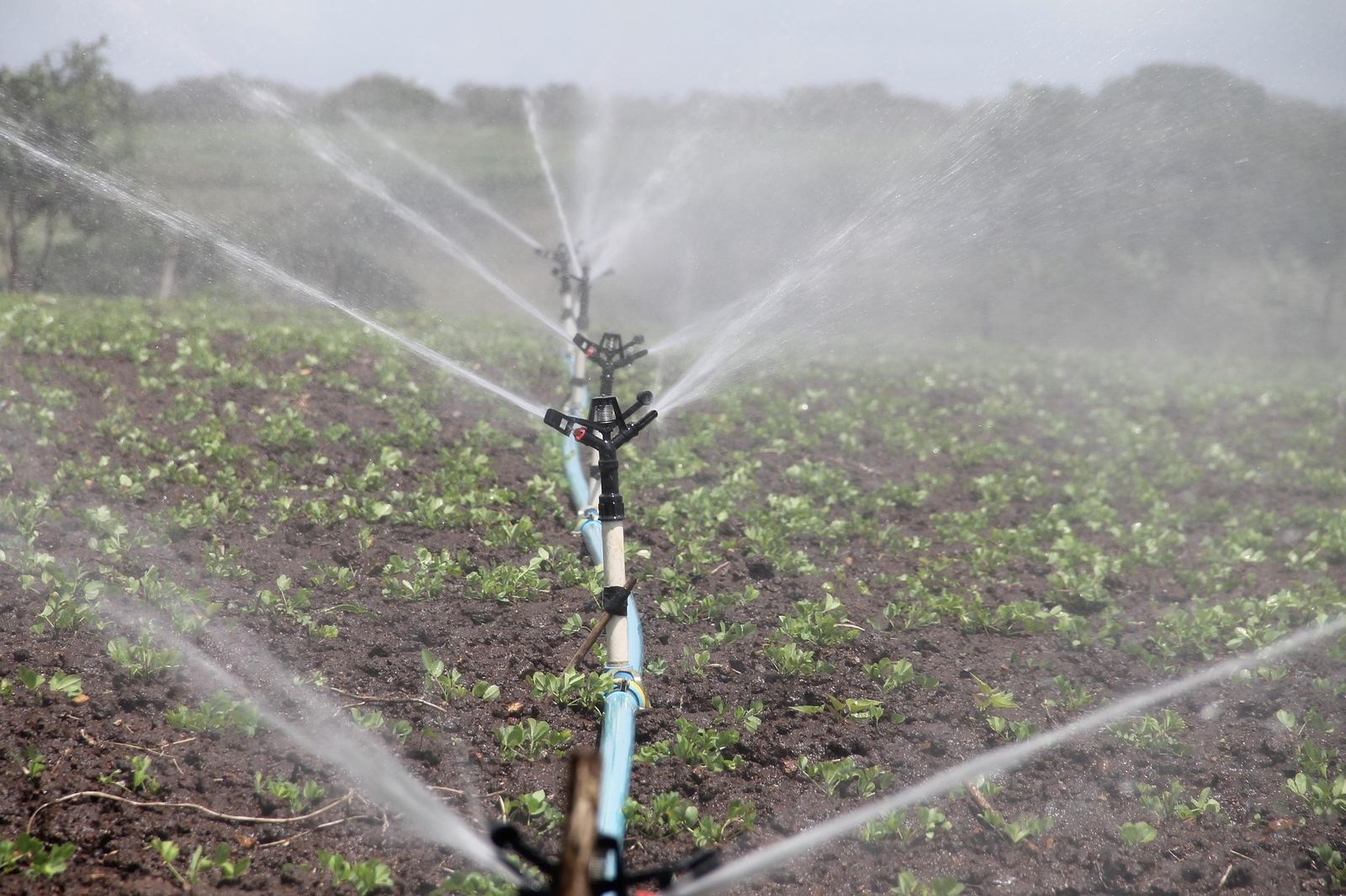
Drip irrigation delivers water slowly, straight to the roots of each plant, through pipes with small outlets called emitters. For vegetables it can mean steadier growth, less disease and less water wasted.
Why farmers choose drip
- Less water wasted: water goes to the roots, not to paths and weeds.
- Drier leaves: many leaf diseases spread on wet leaves, so keeping them dry helps tomatoes, chillies and capsicum.
- Fewer weeds: the soil between rows stays drier.
- Steadier moisture: crops do not swing between dry and wet, which helps prevent problems such as fruit cracking and flower drop.
- Less labour: no carrying of water cans.
The parts of a simple system
- Water source: a tank, a borehole or a river.
- Filter: essential, because dirt blocks the emitters.
- Main pipe: carries water from the tank to the field.
- Drip lines: run along each crop row, with emitters near the plants.
- Taps or valves: to water one block at a time.
A raised tank can push water through a small system by gravity, without a pump.
Before you buy
- Measure your field and decide which rows each line will water.
- Check how much water you have in the dry season, not just after the rains.
- Ask the supplier for emitter spacing that suits your crops and soil.
- Ask what spare parts and after-sales support they offer.
Keeping it working
- Clean the filter regularly.
- Flush the lines by opening their ends now and then.
- Walk the rows and check that every emitter is dripping.
- Mulch along the rows to keep moisture in and protect the pipes from the sun.
Key points
- Drip puts water at the roots and keeps leaves dry.
- A good filter is the most important part.
- Plan around your dry-season water supply.
- Clean, flush and check the system regularly.
Verify locally: figures, varieties and product choices differ by altitude, season and variety. Confirm with your county agricultural extension officer or KALRO before acting.
Questions about our produce or farming?
Talk to us on WhatsApp or send a message. We reply as soon as we can.