
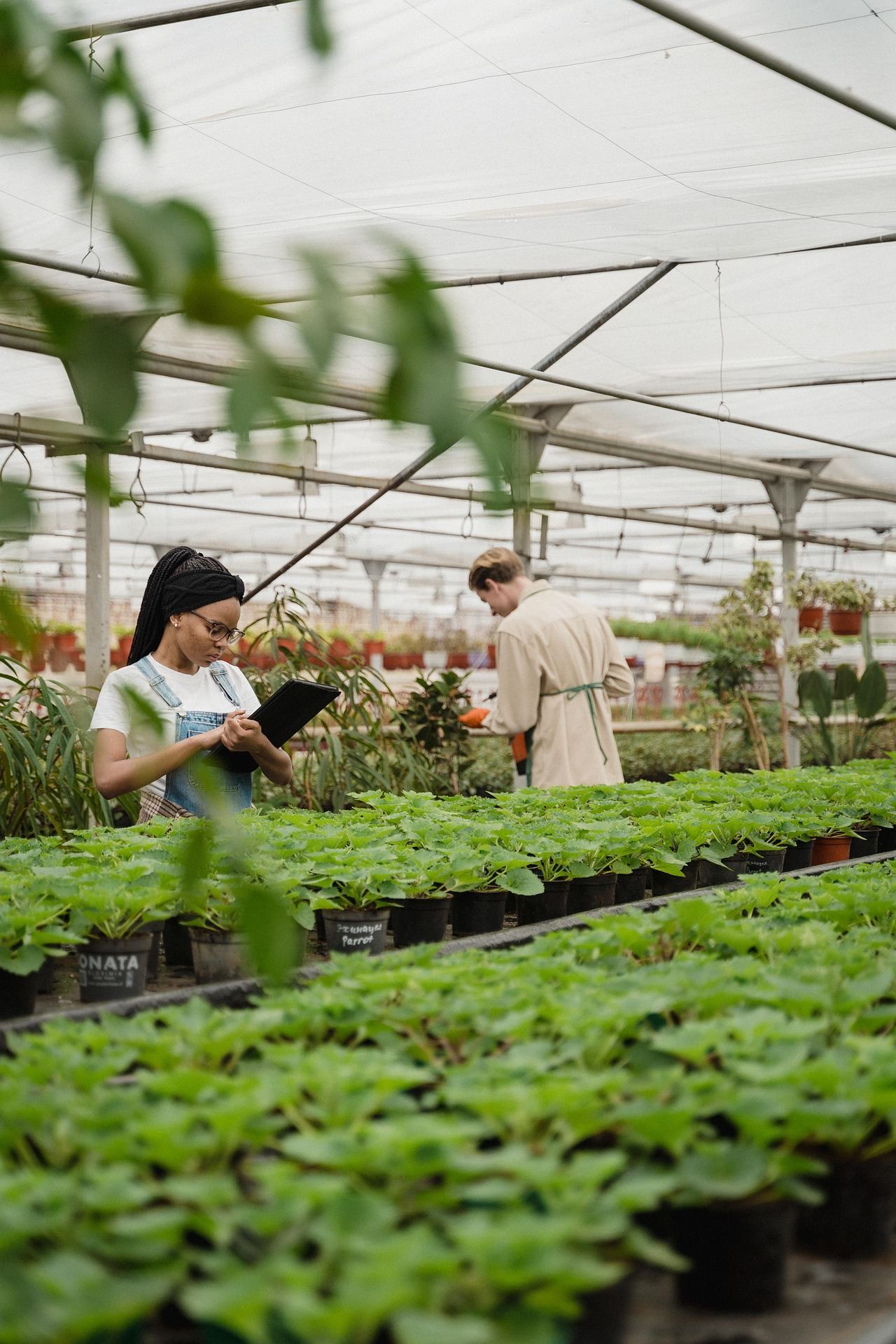
Moving seedlings from the nursery to the field is one of the riskiest moments in a crop's life. Move them too early and they struggle; leave them too long and they become stretched and weak. Here is how to tell when they are ready, and how to give them the best start.
Signs a seedling is ready
- Sturdy stem: short, thick and firm, not long, thin and floppy.
- Good colour: healthy green leaves, with no yellowing, spots or wilting.
- Several true leaves: the leaves that look like the adult plant's, not just the first seed leaves.
- Strong roots: white roots that hold the soil together when you lift a seedling, without circling tightly.
- No pests: check under the leaves for aphids, whiteflies and mites before anything leaves the nursery.
The right age differs from crop to crop and with the weather, so go by these signs rather than by the calendar alone.
Harden them off first
Seedlings raised under shade are soft. For the last week or two in the nursery, gradually give them more sun and wind and slightly less water. This "hardening off" toughens them so they cope with field conditions.
Transplanting day
- Water the nursery well a few hours before lifting, so soil stays around the roots.
- Prepare and water the planting holes in the field first.
- Transplant in the evening or on a cloudy day, when the sun is gentle.
- Lift seedlings carefully, holding them by the leaves, not the stem.
- Plant at the same depth they grew in the nursery, firm the soil gently and water straight away.
- Check the field over the next few days and replace any seedling that dies.
Common mistakes
- Transplanting in the midday heat.
- Letting roots dry out between the nursery and the field.
- Planting diseased seedlings, which spreads problems to the whole field.
Key points
- Choose sturdy, green, pest-free seedlings with strong roots.
- Harden them off before moving them.
- Transplant in the cool of the evening and water at once.
Verify locally: figures, varieties and product choices differ by altitude, season and variety. Confirm with your county agricultural extension officer or KALRO before acting.
Questions about our produce or farming?
Talk to us on WhatsApp or send a message. We reply as soon as we can.