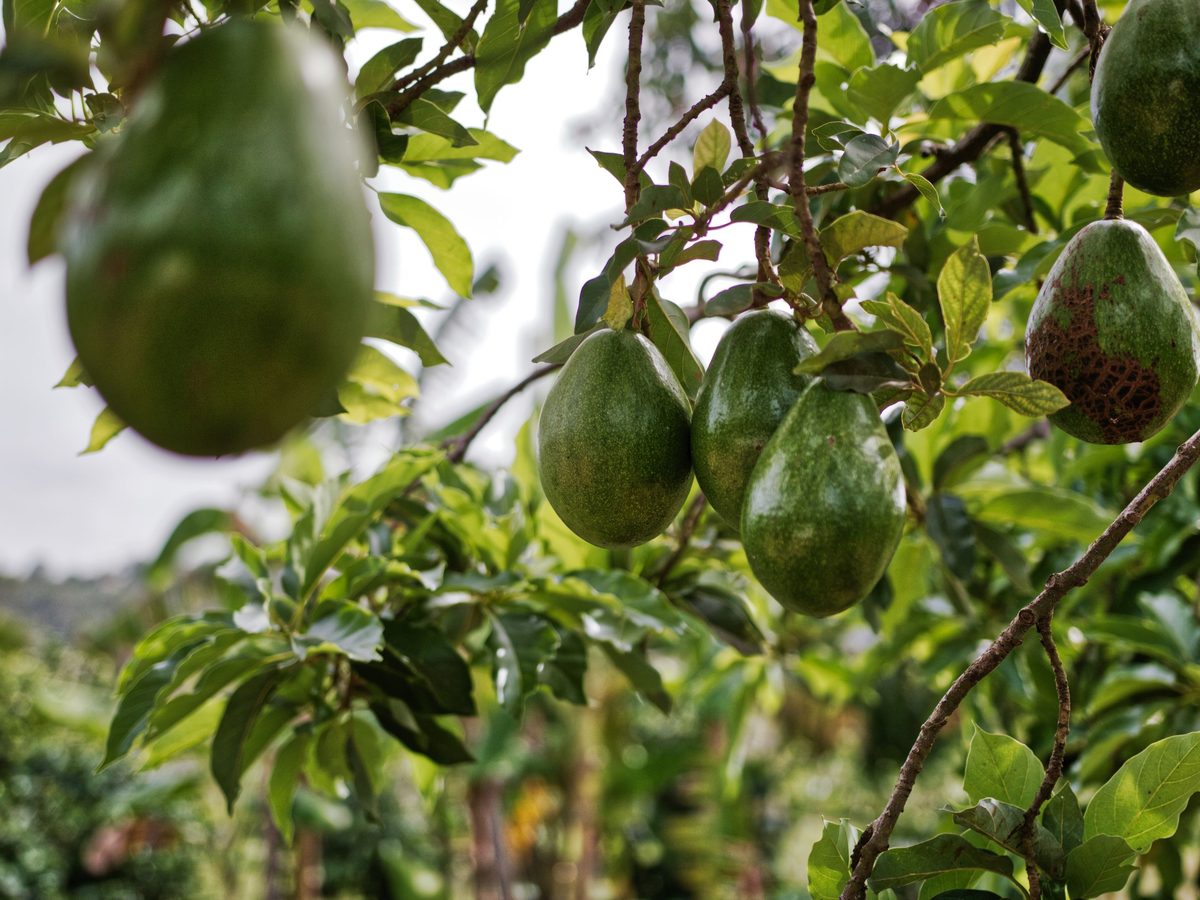
Avocados at Kangema Farm Life
Crop overview
Avocado is a fruit tree that bears for many years. Varieties such as Hass and Fuerte are grown widely in central Kenya. Trees are planted as grafted seedlings and begin bearing after a few years.
Importance of the crop
Avocados sell in local markets and are an important export crop for Kenya. A well-managed orchard gives income for many years.
Suitable climate
Avocados grow well in many parts of the central highlands. They do not tolerate frost or waterlogging, and strong winds damage flowers and fruit.
Verify locally: figures, varieties and product choices differ by altitude, season and variety. Confirm with your county agricultural extension officer or KALRO before acting.
Soil requirements
Deep, well-drained soil is essential, because avocado roots rot in waterlogged ground. Avoid low-lying, wet sites.
Land preparation and planting holes
Dig large planting holes well before planting, mix the topsoil with well-decomposed manure and refill. On slopes, plant along the contour.
Planting material
Buy grafted seedlings of the variety your market wants from a certified nursery. Grafted trees bear true to variety and sooner than trees grown from seed.
Verify locally: figures, varieties and product choices differ by altitude, season and variety. Confirm with your county agricultural extension officer or KALRO before acting.
Planting
Plant at the start of the rains or with irrigation. Keep the graft union above the soil, firm the soil, water well and mulch. Protect young trees from strong sun and wind.
Young tree care
Water young trees in dry spells, keep a weed-free circle around them, and shape them with light pruning so they are easy to manage and harvest.
Spacing
Spacing depends on the variety and how big trees are allowed to grow; follow your nursery's or extension officer's advice.
Verify locally: figures, varieties and product choices differ by altitude, season and variety. Confirm with your county agricultural extension officer or KALRO before acting.
Fertilizer and manure
Apply manure every year and fertilizer based on a soil test and the tree's age. Mulch keeps roots cool and moist.
Verify locally: figures, varieties and product choices differ by altitude, season and variety. Confirm with your county agricultural extension officer or KALRO before acting.
Irrigation
Water young trees regularly in dry spells. Mature trees need water at flowering and fruit growth. Never let water stand around the trunk.
Weed management
Keep a weed-free, mulched circle around each tree. Cover crops between rows can protect the soil.
Pest management
Watch for fruit flies, thrips, mites, scale insects and, for export, false codling moth. Scout regularly and collect fallen fruit. If you must spray, use only products registered for avocado in Kenya.
Verify locally: figures, varieties and product choices differ by altitude, season and variety. Confirm with your county agricultural extension officer or KALRO before acting.
Disease management
Phytophthora root rot is the most serious problem, linked to poor drainage. Also watch for anthracnose and Cercospora spot on fruit. Good drainage and orchard hygiene are the best prevention.
Verify locally: figures, varieties and product choices differ by altitude, season and variety. Confirm with your county agricultural extension officer or KALRO before acting.
Common problems and solutions
| Problem | What to do |
|---|---|
| Leaves yellow and wilt; tree declines | Possible Phytophthora root rot. Improve drainage and get advice. |
| Dark sunken spots on ripening fruit | Possible anthracnose. Improve orchard hygiene and handle fruit gently. |
| Fruit drops early | Often water stress, heat or pests. |
| Fruit does not ripen well | Probably picked before maturity. |
Harvesting
Avocados ripen after picking, so they must be picked when mature, not when soft. Maturity is judged by variety, season and, for export, an oil or dry-matter test. Clip fruit with a short stalk and do not drop it.
Post-harvest handling
Handle fruit gently, keep it in the shade, grade and pack in clean crates. Fruit for export must meet the buyer's standards and current export rules.
Expected production
Yields depend on tree age, variety and management, so we do not quote a figure. Keep records for each block of trees.
Verify locally: figures, varieties and product choices differ by altitude, season and variety. Confirm with your county agricultural extension officer or KALRO before acting.
Marketing
Local markets, traders, supermarkets and exporters buy avocados. Exporters usually work with registered farmers and set quality and maturity standards. Check the current export requirements before planting for export.
Frequently asked questions
How long before avocado trees bear fruit?
Grafted trees usually start bearing after a few years; full production takes longer.
Why buy grafted seedlings?
They bear the variety you want and come into bearing sooner.
Can I export my avocados?
Exporters set standards and there are national rules for avocado exports. Talk to a registered exporter and your extension officer first.
Buying avocados? See it on our Products page or ask us on WhatsApp about availability.
Questions about our produce or farming?
Talk to us on WhatsApp or send a message. We reply as soon as we can.