
Bananas at Kangema Farm Life
Crop overview
Bananas are a perennial crop: a mat of plants keeps producing as new suckers replace the stems that have fruited. Both cooking and dessert types are grown in central Kenya.
Importance of the crop
Bananas give food and income all year round, with steady demand from households, markets and traders.
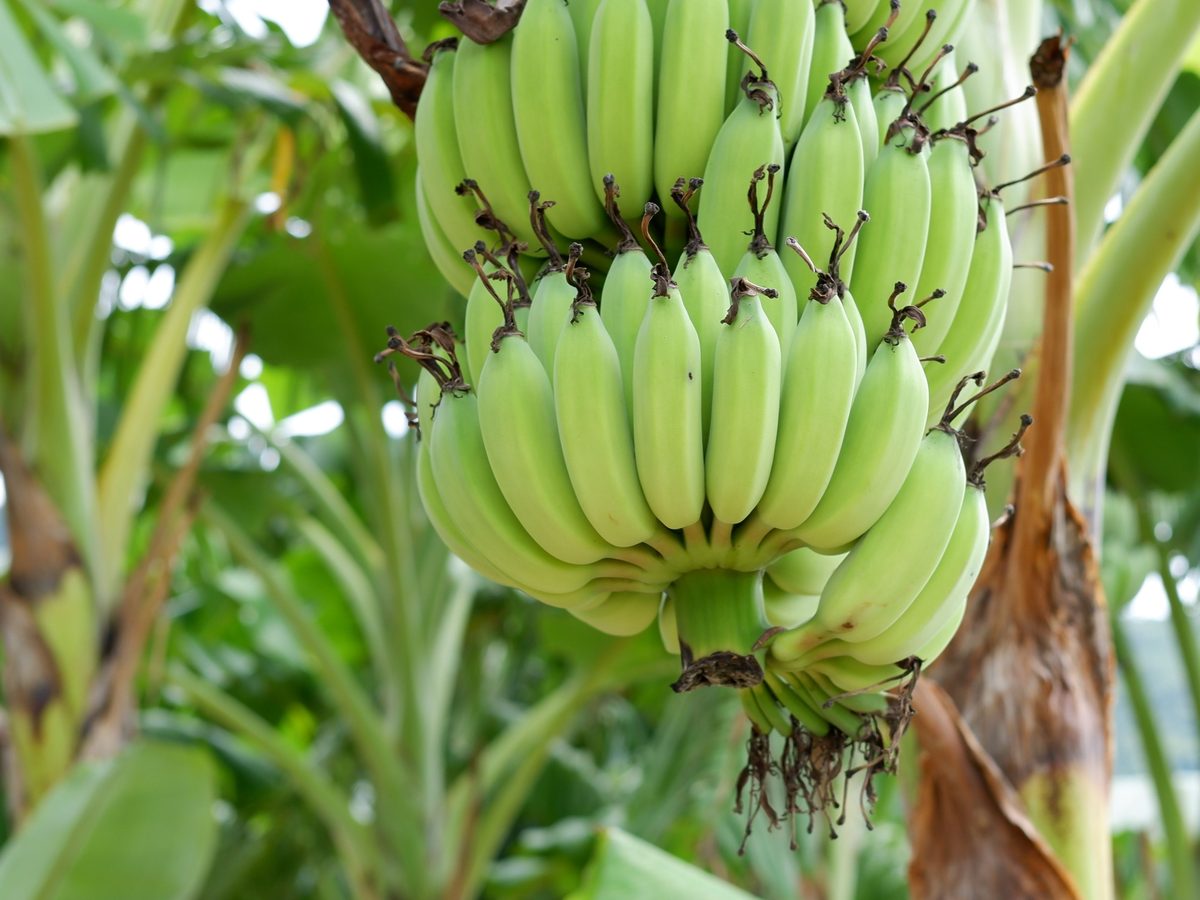
Suitable climate
Bananas need warmth, plenty of water and shelter from strong wind. Cool highland conditions slow growth, so choose varieties suited to your altitude.
Verify locally: figures, varieties and product choices differ by altitude, season and variety. Confirm with your county agricultural extension officer or KALRO before acting.
Soil requirements
Deep, fertile, well-drained soil rich in organic matter is best. Bananas do not tolerate waterlogging.
Land preparation and planting holes
Dig large planting holes, mix the topsoil with plenty of well-decomposed manure and refill before planting.
Planting material
Use clean planting material, ideally tissue culture plantlets from a certified source. Suckers from old farms can carry pests and diseases such as weevils, nematodes and wilts.
Verify locally: figures, varieties and product choices differ by altitude, season and variety. Confirm with your county agricultural extension officer or KALRO before acting.
Planting
Plant at the start of the rains or with irrigation, water well and mulch. Tissue culture plantlets need careful watering in their first weeks.
Desuckering
Keep only a few plants per mat, often a mother, a daughter and a granddaughter, and remove extra suckers. This gives bigger bunches and a steady supply.
Spacing
Follow the spacing recommended for your variety.
Verify locally: figures, varieties and product choices differ by altitude, season and variety. Confirm with your county agricultural extension officer or KALRO before acting.
Fertilizer and manure
Bananas are heavy feeders, especially of potassium. Apply manure regularly and fertilizer based on a soil test. Mulch heavily with old leaves and stems.
Verify locally: figures, varieties and product choices differ by altitude, season and variety. Confirm with your county agricultural extension officer or KALRO before acting.
Irrigation
Bananas need plenty of water; water stress delays bunches and reduces their size. Mulch helps hold moisture.
Weed management
Keep the area around the mats weed-free and mulched.
Pest management
Banana weevils and nematodes damage the corm and roots and make plants topple. Use clean planting material, keep the field clean and chop old stems. Ask your extension officer before using any chemical.
Verify locally: figures, varieties and product choices differ by altitude, season and variety. Confirm with your county agricultural extension officer or KALRO before acting.
Disease management
Banana Xanthomonas wilt, Fusarium wilt (Panama disease), bunchy top and leaf spots such as Sigatoka are serious. Use clean planting material, disinfect cutting tools between mats, remove the male bud after the last hand forms, and destroy infected plants.
Verify locally: figures, varieties and product choices differ by altitude, season and variety. Confirm with your county agricultural extension officer or KALRO before acting.
Common problems and solutions
| Problem | What to do |
|---|---|
| Plants wilt, leaves yellow and fruit ripens early and rots | Possible Xanthomonas wilt. Destroy plants and disinfect tools. |
| Plants topple over | Often weevils or nematodes. Use clean material and field hygiene. |
| Bunched, narrow upright leaves | Possible bunchy top. Remove and destroy affected plants. |
| Small bunches | Too many suckers, poor feeding or water stress. |
Harvesting
Harvest when the fingers are full and rounded, before they ripen on the plant. Cut the bunch carefully, then cut down the stem that fruited.
Post-harvest handling
Handle bunches gently to avoid bruising, keep them in the shade and transport quickly. Dessert bananas are ripened after harvest.
Expected production
Bunch size depends on variety and management, so we do not quote a figure. Keep records for each block.
Verify locally: figures, varieties and product choices differ by altitude, season and variety. Confirm with your county agricultural extension officer or KALRO before acting.
Marketing
Sell to markets, traders, supermarkets and households. Regular desuckering gives bunches all year round.
Frequently asked questions
Why use tissue culture bananas?
They are free of pests and diseases at planting and grow evenly.
Why remove the male bud?
It helps the bunch fill and reduces the spread of Xanthomonas wilt by insects.
Buying bananas? See it on our Products page or ask us on WhatsApp about availability.
Questions about our produce or farming?
Talk to us on WhatsApp or send a message. We reply as soon as we can.