
French beans at Kangema Farm Life
Crop overview
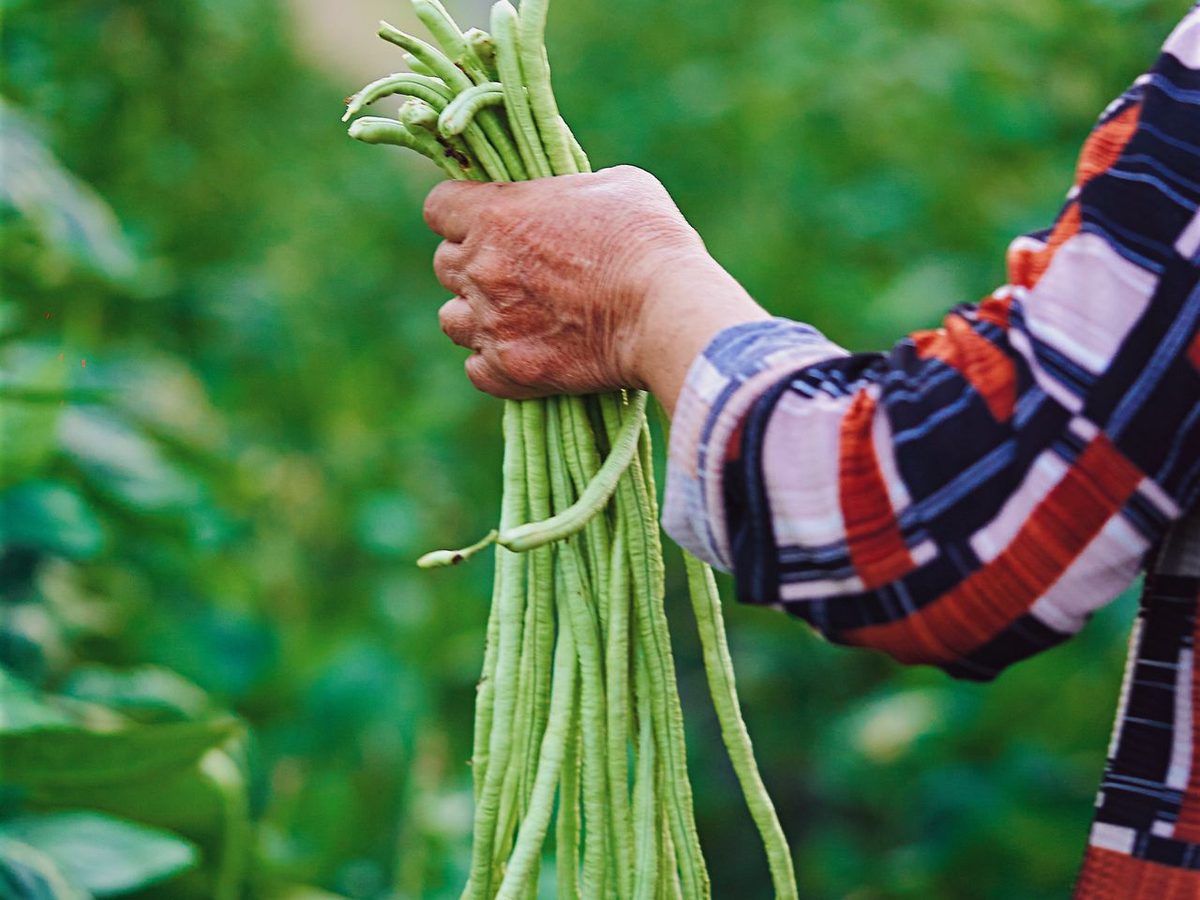
French beans are grown for their slender, tender green pods, picked while young. They are sown directly in the field and give a quick crop, with picking starting a few weeks after flowering.
Importance of the crop
French beans are an important crop for Kenyan smallholders, with buyers in local markets, hotels, supermarkets and exporters. As a legume, the crop also works with soil bacteria to add nitrogen to the soil.
Suitable climate
French beans grow best in moderate temperatures. Very hot weather causes flowers to drop, and cold or very wet weather encourages disease. They do well in many highland areas with water available.
Verify locally: figures, varieties and product choices differ by altitude, season and variety. Confirm with your county agricultural extension officer or KALRO before acting.
Soil requirements
Well-drained, fertile soil rich in organic matter is best. Avoid waterlogged soils, which cause root rots.
Land preparation
Prepare a fine seedbed and mix in well-decomposed manure. Rotate with non-legume crops such as cabbages, kales or maize.
Seed selection
Use certified, disease-free seed of a variety that suits your market, as buyers often want a particular pod length and thickness. Buyers who export may specify the variety.
Verify locally: figures, varieties and product choices differ by altitude, season and variety. Confirm with your county agricultural extension officer or KALRO before acting.
Sowing
French beans are sown directly in the field, not in a nursery. Sow into moist soil at the depth recommended on the seed packet. Sowing in batches every few weeks gives a steadier harvest.
Germination and early care
Seedlings emerge within days in warm, moist soil. Fill gaps early and protect young plants from bean fly and cutworms.
Spacing
Follow the spacing recommended for your variety. Good spacing improves airflow, which reduces disease, and makes picking easier.
Verify locally: figures, varieties and product choices differ by altitude, season and variety. Confirm with your county agricultural extension officer or KALRO before acting.
Fertilizer and manure
Use manure and fertilizer based on a soil test. Beans need less nitrogen than leafy crops, but they still need balanced nutrition, especially phosphorus at planting.
Verify locally: figures, varieties and product choices differ by altitude, season and variety. Confirm with your county agricultural extension officer or KALRO before acting.
Irrigation
Keep soil evenly moist, especially at flowering and pod filling. Water stress makes flowers and pods drop and gives curved, poor-quality pods.
Weed management
Keep the crop weed-free, especially in the early weeks. Weed shallowly to protect the roots.
Pest management
Watch for bean fly (on young plants), aphids, thrips, whiteflies, red spider mites and pod borers. Scout weekly. If you must spray, use only products registered for French beans in Kenya and respect the pre-harvest interval, as pods are picked often. See pest management.
Verify locally: figures, varieties and product choices differ by altitude, season and variety. Confirm with your county agricultural extension officer or KALRO before acting.
Disease management
Common diseases include rust, anthracnose, angular leaf spot, halo blight, root rots and bean common mosaic virus. Use clean seed, rotate crops and avoid working in the crop when leaves are wet.
Verify locally: figures, varieties and product choices differ by altitude, season and variety. Confirm with your county agricultural extension officer or KALRO before acting.
Common problems and solutions
| Problem | What to do |
|---|---|
| Young plants wilt and die | Possible bean fly or root rot. Use clean seed, rotate and check stems at the base. |
| Rusty-brown spots under leaves | Possible rust. Improve spacing and ask for advice. |
| Flowers drop | Often heat or water stress. Keep watering steady. |
| Curved or poorly filled pods | Usually water stress or pests. Water evenly and scout. |
| Mottled, curled leaves | Possible virus spread by aphids. Use clean seed and control aphids. |
Harvesting
Pick pods young, when they are the length and thickness your buyer wants, and before the seeds bulge. Pick every few days, as pods grow quickly and over-mature pods lose value.
Post-harvest handling
Pick in the cool of the morning, keep pods in the shade, and grade out curved, damaged or over-mature pods. Pack carefully and deliver quickly, ideally keeping them cool.
Expected production
Yields depend on variety, management and how long picking continues, so we do not quote a figure. Record each picking to learn your field's performance.
Verify locally: figures, varieties and product choices differ by altitude, season and variety. Confirm with your county agricultural extension officer or KALRO before acting.
Marketing
Exporters and supermarkets often buy under agreed standards for quality and pesticide use. Local markets and hotels are also good outlets. Agree the variety, grade and schedule with your buyer before planting.
Frequently asked questions
How often should I pick French beans?
Every few days once picking starts. Regular picking keeps quality high and encourages more pods.
Do French beans need a nursery?
No. They are sown directly in the field.
Do I need to stake French beans?
Bush types do not; climbing types need stakes or strings.
Buying french beans? See it on our Products page or ask us on WhatsApp about availability.
Questions about our produce or farming?
Talk to us on WhatsApp or send a message. We reply as soon as we can.