
Onions at Kangema Farm Life
Crop overview
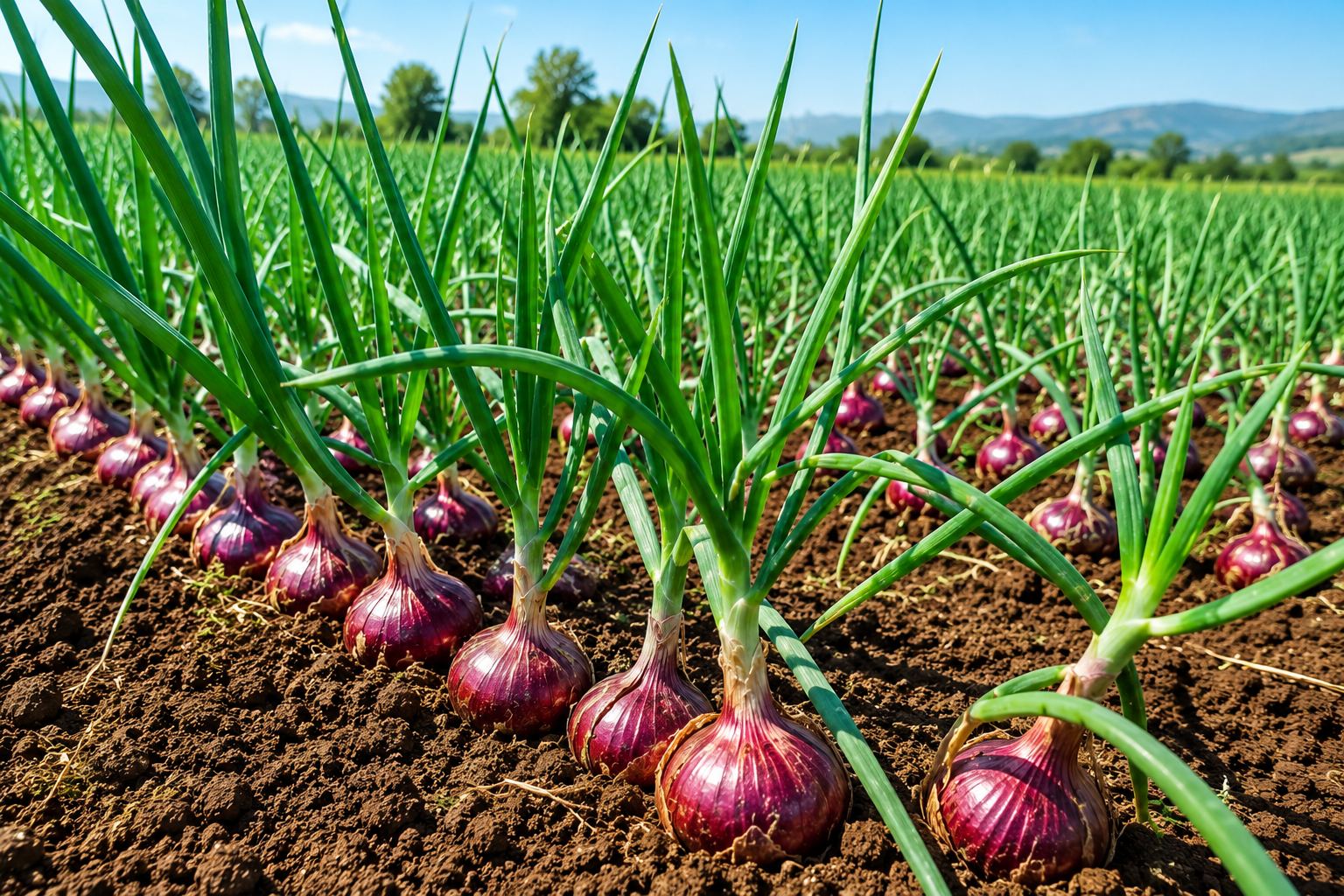
Onions are grown for their bulbs (dry onions) or for their green leaves (spring onions). They have shallow roots and grow slowly at first, so they compete poorly with weeds.
Importance of the crop
Onions are used in almost every Kenyan kitchen, so demand is steady. Well-cured bulb onions store for weeks or months, which lets you sell when prices are better.
Suitable climate
Onions grow best with cool weather during early growth and warm, dry weather as the bulbs mature. How a variety bulbs depends on day length, so choose varieties recommended for Kenya.
Verify locally: figures, varieties and product choices differ by altitude, season and variety. Confirm with your county agricultural extension officer or KALRO before acting.
Soil requirements
Onions need well-drained, fertile, loose soil that is free of weeds. Heavy or waterlogged soils cause rots and misshapen bulbs.
Land preparation
Prepare a fine, firm seedbed and remove all weeds and their roots. Mix in well-decomposed manure. Raised beds help in wetter areas.
Seed and planting material
Use fresh, certified seed, as onion seed loses its strength quickly. Choose bulb or spring onion varieties according to your market. Some farmers also plant small bulbs (sets).
Verify locally: figures, varieties and product choices differ by altitude, season and variety. Confirm with your county agricultural extension officer or KALRO before acting.
Nursery management
Sow seed thinly in lines in a clean nursery bed and keep it moist. Weed carefully. Seedlings are ready to move when they are about pencil thickness. See our nursery guide.
Transplanting
Trim long roots and leaves lightly if your extension officer advises it, and plant at the same depth as in the nursery. Do not plant too deep, which gives poor bulbs. Water right after planting.
Spacing
Spacing affects bulb size: closer spacing gives smaller bulbs. Follow the recommendation for your variety and market.
Verify locally: figures, varieties and product choices differ by altitude, season and variety. Confirm with your county agricultural extension officer or KALRO before acting.
Fertilizer and manure
Use well-decomposed manure and fertilizers based on a soil test. Avoid too much nitrogen late in the season, which delays maturity and makes bulbs store poorly.
Verify locally: figures, varieties and product choices differ by altitude, season and variety. Confirm with your county agricultural extension officer or KALRO before acting.
Irrigation
Water lightly and regularly while bulbs form. Reduce watering as the crop matures and the leaves start to fall over, so the bulbs dry and store well.
Weed management
Weeding is critical because onions have thin leaves that do not shade weeds out. Weed by hand or carefully with a hoe, without damaging the shallow roots.
Pest management
Thrips are the most important pest: they cause silvery streaks on leaves. Also watch for cutworms and onion maggots. Scout weekly. If you must spray, use only products registered for onions in Kenya. See pest management.
Verify locally: figures, varieties and product choices differ by altitude, season and variety. Confirm with your county agricultural extension officer or KALRO before acting.
Disease management
Common diseases include purple blotch, downy mildew, neck rot and basal rot. Rotation, good drainage, wide enough spacing and careful curing help prevent them.
Verify locally: figures, varieties and product choices differ by altitude, season and variety. Confirm with your county agricultural extension officer or KALRO before acting.
Common problems and solutions
| Problem | What to do |
|---|---|
| Silvery streaks on leaves | Thrips. Scout regularly and act early. |
| Purple spots with yellow edges on leaves | Possible purple blotch. Improve spacing and airflow and ask for advice. |
| Bulbs rot in storage | Usually poor curing or damage. Cure fully and store dry and ventilated. |
| Thick necks and small bulbs | Often too much late nitrogen or planting too deep. |
| Bulbs split or form doubles | Often uneven watering or variety. Keep watering steady. |
Harvesting
Bulb onions are ready when most of the leaves have fallen over and started to dry. Lift them carefully. Spring onions are pulled while the leaves are green and fresh.
Curing and storage
Cure bulbs by drying them in a shaded, airy place until the necks are dry and tight and the outer skins are papery. Store cured onions in a cool, dry, ventilated place, in nets or on racks, and remove any that rot.
Expected production
Yields vary with variety, spacing, management and season, so we do not quote a figure. Keep records to learn what your field produces.
Verify locally: figures, varieties and product choices differ by altitude, season and variety. Confirm with your county agricultural extension officer or KALRO before acting.
Marketing
Sell to markets, traders, hotels and retailers. Grade bulbs by size and sell clean, well-cured onions. Storing well-cured bulbs can let you sell when prices rise.
Frequently asked questions
How do I know onions are cured?
The neck is dry and tight, and the outer skin is dry and papery.
Can I grow onions from seed directly in the field?
It is possible, but a nursery gives better control of weeds and plant spacing.
Why do my onions not form bulbs?
Often the wrong variety for the day length, or too much nitrogen. Choose varieties recommended for Kenya.
Buying onions? See it on our Products page or ask us on WhatsApp about availability.
Questions about our produce or farming?
Talk to us on WhatsApp or send a message. We reply as soon as we can.